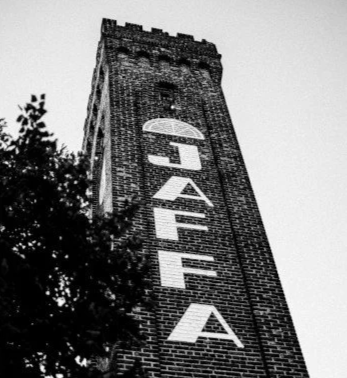
Photo of the exterior signage and orange slice logo for CookNSolo’s Jaffa Bar restaurant
CookNSolo’s newest restaurant in Philly is named Jaffa Bar. It opened in October 2024, one year into the most recent phase of genocide against Palestinians. Here is how CookNSolo describes the restaurant on its website: “The restaurant...takes a cue from the sunlit hues of the architecture of its namesake, the port city of Jaffa — a coastal Israeli city that for thousands of years has welcomed the world through its port.”
Jaffa is the name of the Palestinian city that was renamed Tel Aviv after the Nakba in 1948, when Zionist militias ethnically cleansed it of 98% of its Arab population. (Source: “Jaffa: From Eminence to Ethnic Cleansing,” ) But that’s a history that CookNSolo doesn’t want you to think about when you slurp oysters and their signature orange-flavored cocktails inspired by the famous Jaffa oranges grown by Palestinian farmers in the region for hundreds of years.
Jaffa is an ancient port city that has been inhabited since the Bronze Age. During the 19th and early 20th centuries, it was the primary entry point for travelers visiting Palestine. It was the largest city in historic Palestine during the years of the British mandate, with a population of over eighty-thousand Palestinians in addition to the forty-thousand people living in neighboring towns and villages.
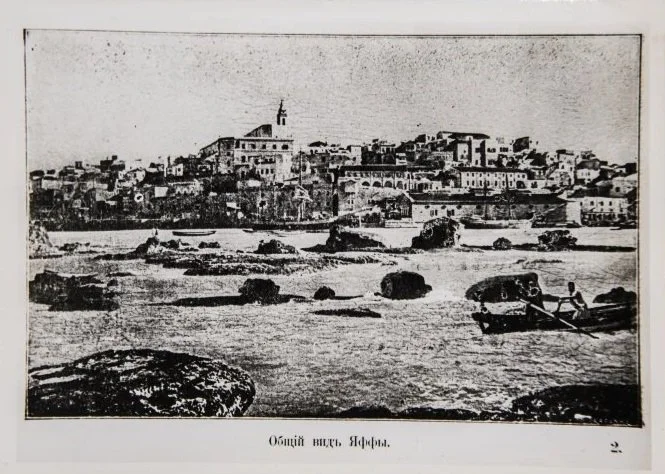
A glimpse of Jaffa 1908 via https://palarchive.org/
It was considered by many to be the economic and cultural capital of Palestine. Beginning in the early nineteenth century, the people of Jaffa had cultivated citrus groves, particularly oranges. International demand for Jaffa oranges meant that by the 1930s, Jaffa was exporting tens of millions of citrus crates to the rest of the world. (Source: “Jaffa: The Rise and Fall of an Agrarian City)
It was also a cultural hub, the center of Palestinian journalism and theater. It was home to the country’s most important newspapers and publication houses, cinemas, athletics clubs, and cultural societies. It was lovingly known as “The Bride of the Sea.” (Jaffa: From Eminence to Ethnic Cleansing)
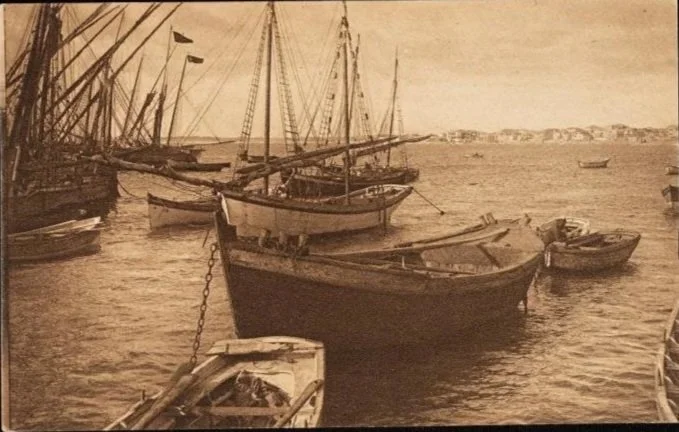
“The Sea Port of Jaffa Postcard 1921" via palarchive.org
Everything changed in 1948.
On 14 May 1948, Jaffa was captured by the Zionist military forces; that same evening the leaders of the Zionist movement in Palestine declared the establishment of the state of Israel. Ninety-eight percent of the Arab Palestinian population in Jaffa was expelled during the Nakba: of a population of nearly 120,000 persons, only 3,900 citizens were allowed to stay, and those who remained were rounded up and placed in a neighborhood named al-Ajami, which was sealed off from the rest of the city and administered as a military prison. During this period, al-Ajami was completely surrounded by barbed wire fencing that was patrolled by Israeli soldiers and guard dogs. The new Jewish residents of Jaffa, based on their experience under Nazism in Europe, began to refer to the Palestinian neighborhood as the “ghetto.” (Jaffa: From Eminence to Ethnic Cleansing)
The city, now called Tel Aviv-Yafa, immediately began drawing up plans for what they called “Judaization,” renaming the Arabic streets of the city after Zionist leaders, demolishing much of the old Arab architecture, and completely destroying the buildings in the surrounding villages that were depopulated during the Nakba. The new curriculum introduced in Palestinian schools denied that the place had any Arab-Palestinian history at all, a facet of the Israeli education system that continues today. (Jaffa: From Eminence to Ethnic Cleansing)
Jaffa residents who survived the Nakba tell stories of how their homes were taken by new Jewish settlers, and how they would try to convince the new residents of their homes to give them back some of their furniture, clothes, documents, or photographs. In some of these cases, the house's new resident would give back some of these precious personal items, in most of the cases the response was to consider the original Palestinian owner an intruder, and to call the police or report them to the military commander. (Jaffa: From Eminence to Ethnic Cleansing)
In the surrounding villages, Palestinian farmers were forced off of their land, which the Israeli government handed over to Jewish settlers. These settlers then exploited the same Palestinian farmers to work on their own land as day laborers, making money off the fruits of the land that Palestinians had cultivated for generations. (Jaffa: From Eminence to Ethnic Cleansing)
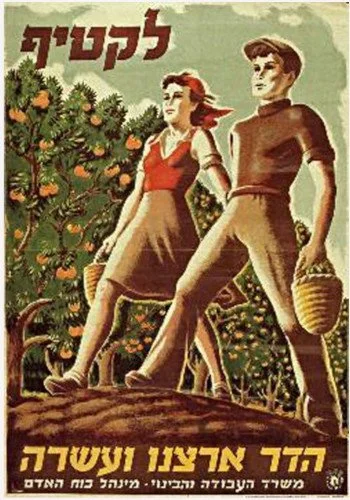
Poster produced by the Israeli Ministry of Labor and Housing in 1955: “Picking Citrus is the splendor of our country and its wealth” -via Palestine Poster Project
The Jaffa orange was re-branded as Israeli and marketed to the world as a product of cutting-edge Zionist agricultural techniques. The theft of Palestinian oranges and its re-appropriation by “Israel” has become a symbol of Zionist colonization more broadly. A 1984 Fatah poster for Land Day by Abdel Aziz Ibrahim depicts a hand reaching through a barbed wire fence toward a bleeding orange.
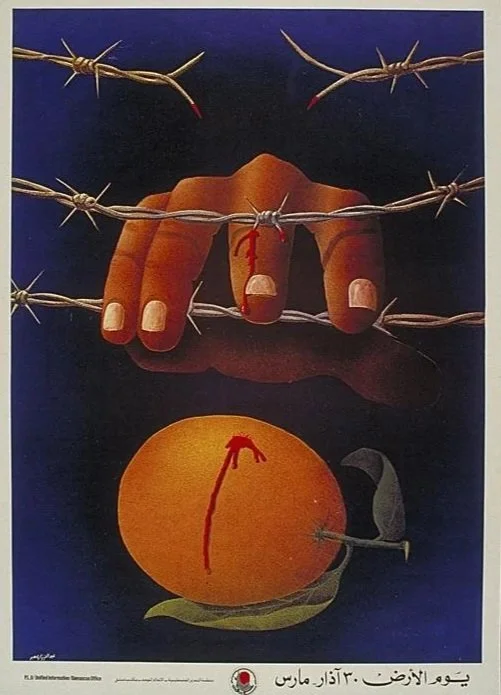
“Bitter Fruit” via Palestine Poster Project
Beloved Palestinian author Ghassan Kanafani wrote a famous story called “The Land of Sad Oranges,” which shows the Nakba through the eyes of a Palestinian child who grew up in an orange grove and whose family is displaced to Lebanon:
“And all the orange trees which your father had abandoned to the Jews shone in his eyes, all the well-tended orange tree which he had bought one by one were printed on his face and reflected in the tears which he could not control in front of the officer at the police post.” (Haidar Eid, “The power of Ghassan Kanafani’s The Land of Sad Oranges” )
The city that became known as Tel Aviv became a major site of settlement for Bulgarian Jews, so much so that some Israelis described Tel Aviv as a Bulgarian city. And here Mike Solomonov has a personal connection to this story: his father, a Bulgarian Jew, moved to “Israel” in 1948, the year of the Nakba, and grew up in Lod, a city just outside of Tel Aviv and part of the greater Jaffa region. Mike himself grew up in a suburb of Tel Aviv, on land stolen from his Palestinian neighbors just a few decades before. (“Michael Solomonov and Steve Cook: The Israeli food we cook tells our story” )
And then, in 2024, he opened a restaurant, named it Jaffa Bar, put a Jaffa orange on it, and called it Israeli cuisine. It’s not enough to steal the land and the fruits of the land- he had to steal its history and memory too, and claim it for the colonizers.
Shame on you Mike Solomonov! Boycott Jaffa Bar! Boycott CookNSolo!
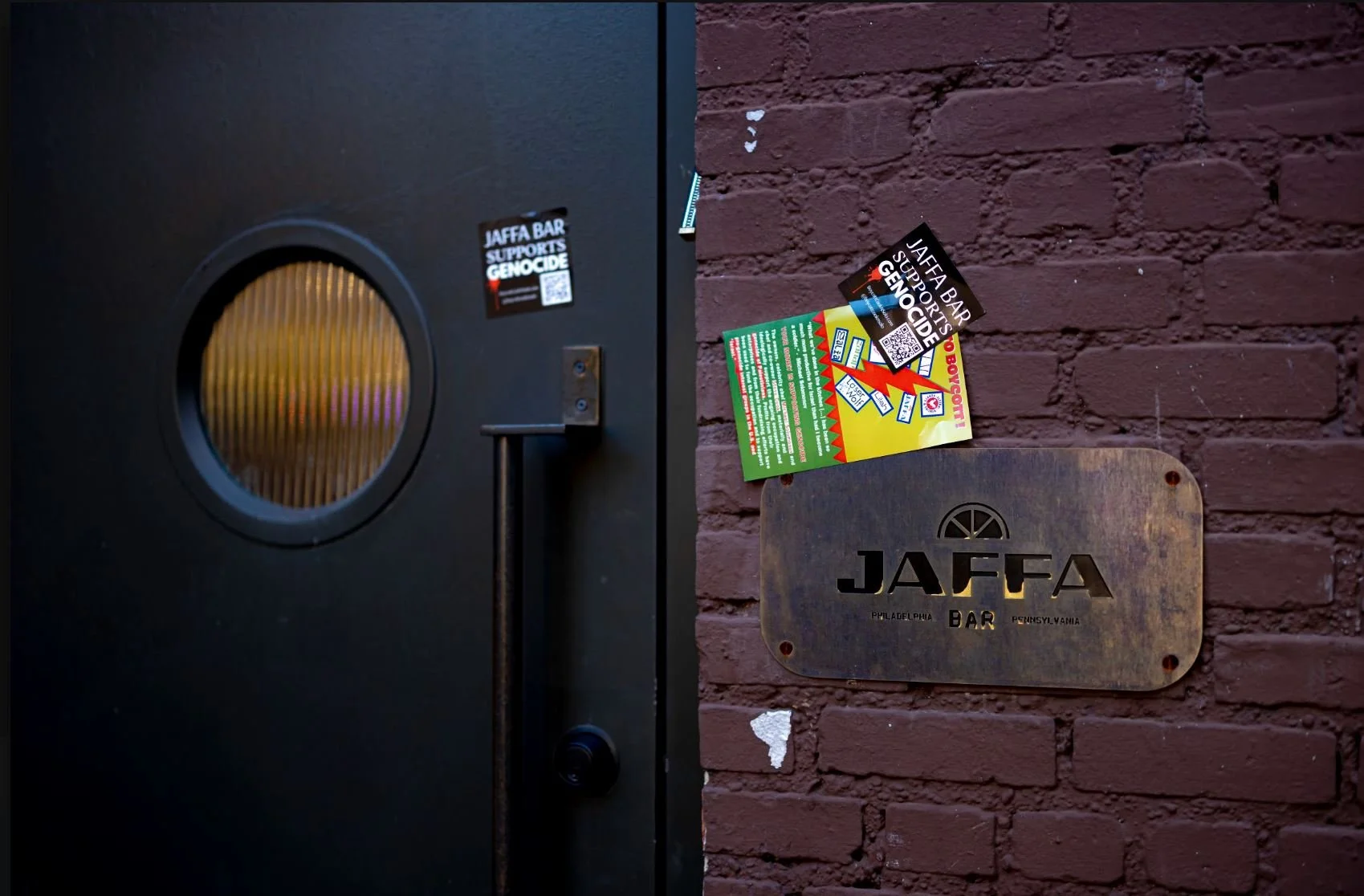
Stickers that read “Jaffa Bar Supports Genocide” and informational flyers left on a sign and door of Jaffa Bar